


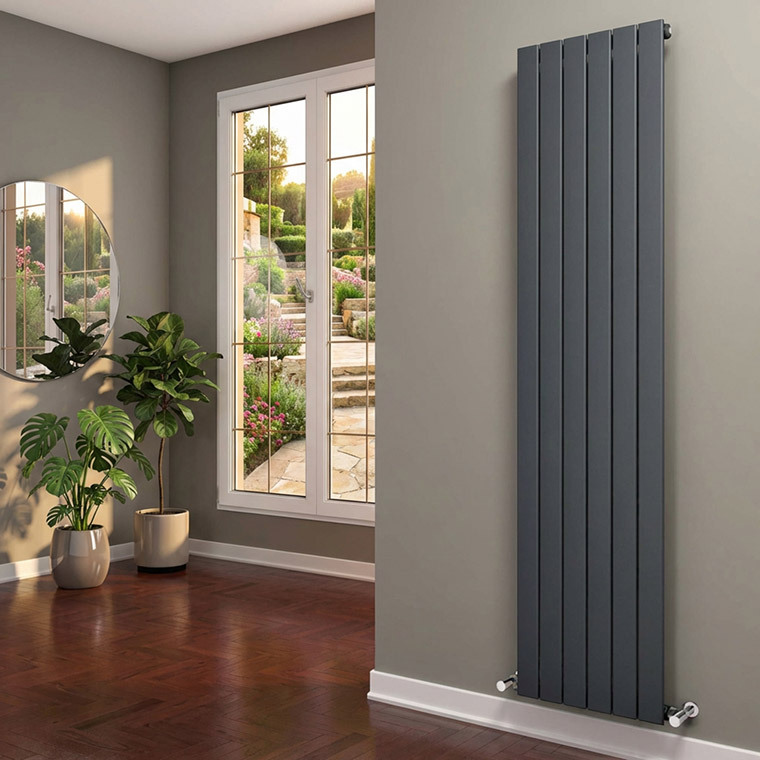

Comfort in a living space begins with choosing the right heating product. Whether you want warm towels in the bathroom, balanced heat in the living room, or a heating solution that complements your interior design, towel rails and radiators should be evaluated from several perspectives.
When dimensions, heat output, system compatibility, material and everyday usability are considered together, it becomes easier to achieve a result that is both functional and visually harmonious. So, what should you pay attention to when making your choice?
Start by Determining the Room's Heat Requirement
The first step is to understand how much heat the room where the product will be installed actually needs. Floor area is an important starting point, but it is not enough on its own. Ceiling height, local climate, external walls, window area, insulation quality and the desired room temperature should also be taken into account.
For example, two bathrooms of the same size can have very different heat requirements if one is located within a well-insulated apartment while the other has large windows and exposed external walls. Whenever possible, base your product selection on a room-by-room heat loss calculation.
Consider Heat Output, Not Dimensions Alone
A radiator that looks large will not necessarily meet your heating needs. Products with the same height and width may deliver different levels of heat depending on their design, depth, tube configuration or panel construction. When comparing products, check the Watt output stated in the technical data.
For hydronic systems, it is also important to understand the temperature conditions under which the output was measured. The ΔT value shown in radiator catalogues represents the difference between the radiator's average water temperature and the room temperature. Outputs stated at ΔT50 and ΔT30 should not be compared directly. A radiator produces less heat when the system operates at lower water temperatures, so projects using heat pumps should be sized according to actual operating temperatures.
Clarify What You Expect from Your Towel Rail
A towel rail helps warm and dry towels while also contributing to bathroom heating. The key question is whether you want it mainly for towel comfort or whether it will serve as the bathroom's primary heat source.
If it will be used as the main heater, its output should be sufficient for the bathroom's calculated heat requirement. Remember that towels placed over the product can affect how much heat is released into the room. Large bathrooms or spaces with high heat loss may require an additional heating solution.
For everyday use, also consider towel spacing, the number of people in the household and ease of access. Make sure the model you choose works well with the size and type of towels you normally use.
Choose Hydronic, Electric or Dual-Fuel Operation to Suit Your Needs
Hydronic Systems
Hydronic towel rails and radiators operate with hot water supplied by a boiler or central heating system. The selected model's connection configuration, permitted operating pressure and temperature limits must be compatible with the existing installation.
Electric Towel Rails
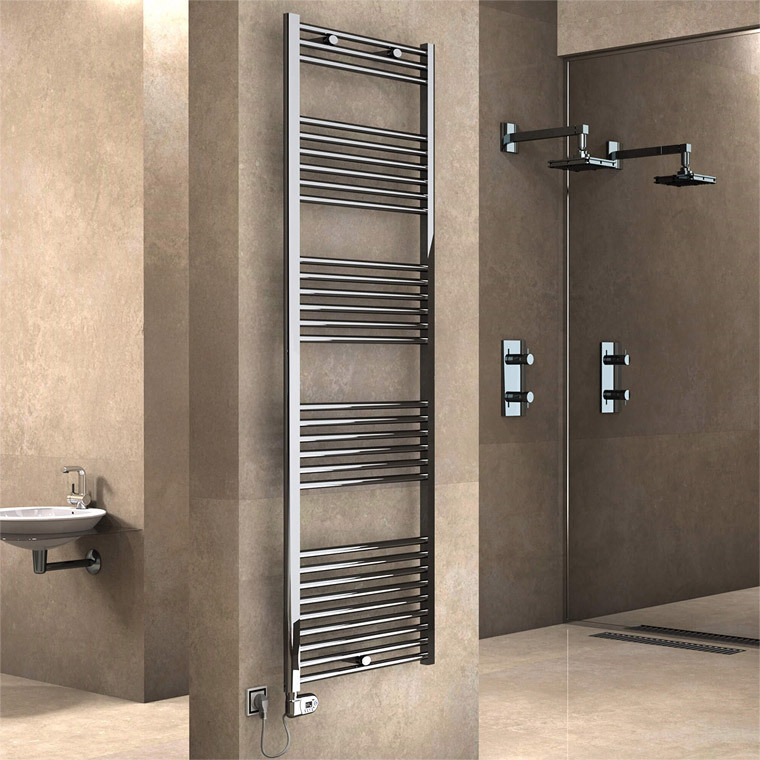
Electric towel rails are useful when you want to warm towels without running the central heating system. They are particularly practical during transitional seasons. Check timer functions, temperature settings and control options that suit your daily habits.
Dual-Fuel Operation
Where approved by the manufacturer, dual-fuel operation combines hydronic and electric use. Do not assume that every towel rail can later be converted for electric operation; the model, electric heating element kit and installation method must be evaluated together.
Evaluate Material and Surface Quality Together
Materials such as steel, aluminium and stainless steel offer different design and usage characteristics. Rather than choosing solely by material name, consider heat output, system compatibility, manufacturing quality and maintenance requirements together.
In bathrooms, surface preparation and the quality of paint or other finishes are especially important. The consistency of welds and joints, the uniformity of the finish and the manufacturer's cleaning instructions are all useful details to review. Because the heat output of the same model can vary between chrome, painted or other decorative finishes, always check the technical value for the exact finish you intend to purchase.
Proper cleaning also helps the product maintain its appearance over time. Avoid abrasive sponges and chemicals that are not permitted in the manufacturer's care instructions.
Plan Design, Dimensions and Installation Location Together
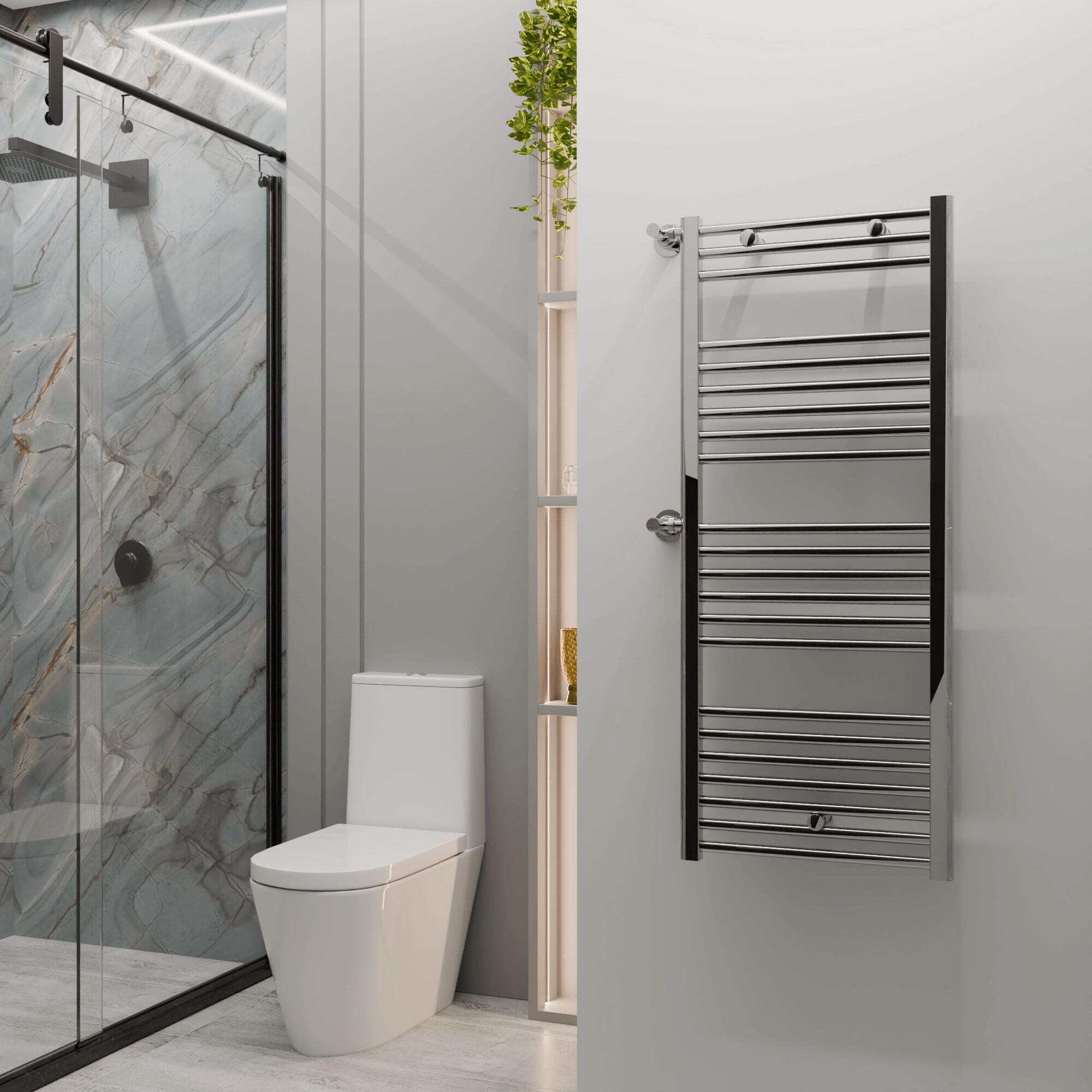
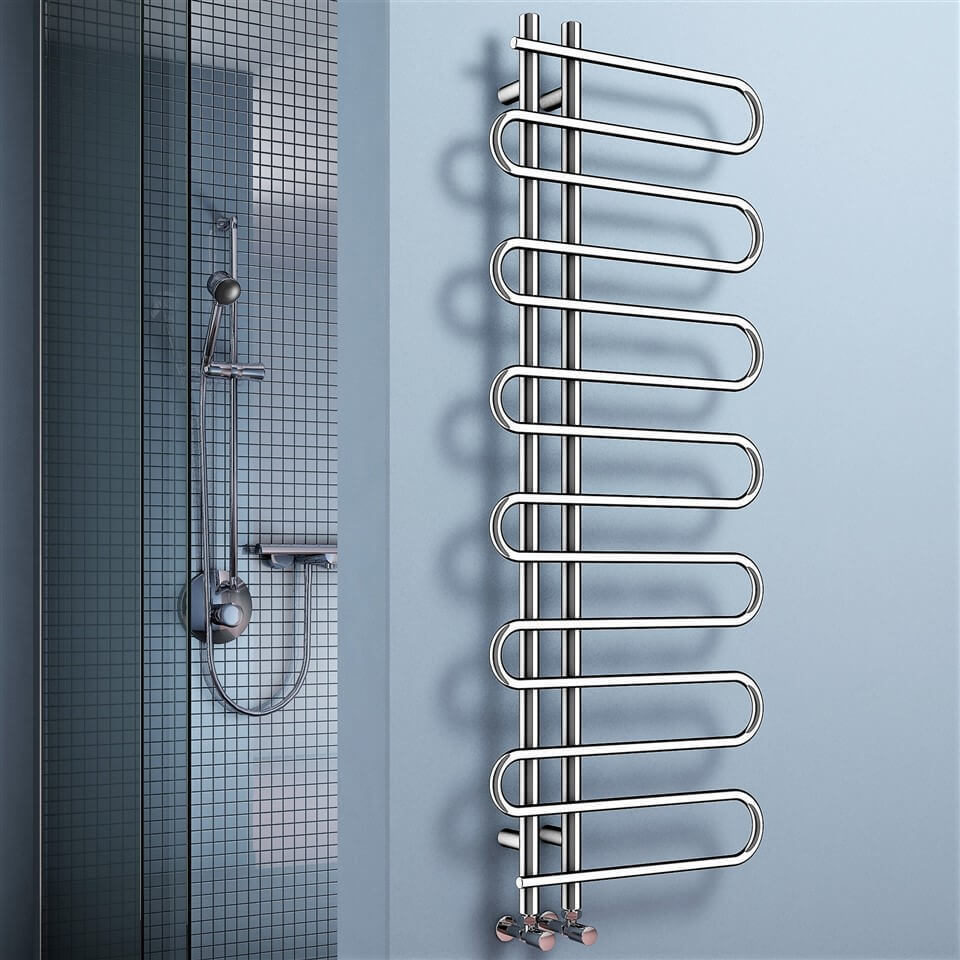
Vertical radiators can be useful where wall space is narrow, while horizontal models can suit different room layouts. For towel rails, choosing a size that simply fits on the wall is not enough. Door movement, shower enclosures, vanity units, towel access and the clearance required for cleaning should all be considered.
Before ordering, check the product's overall dimensions, projection from the wall, connection direction and the distance between connection centres. Remember that the overall product width and the pipe centre distance are not the same measurement.
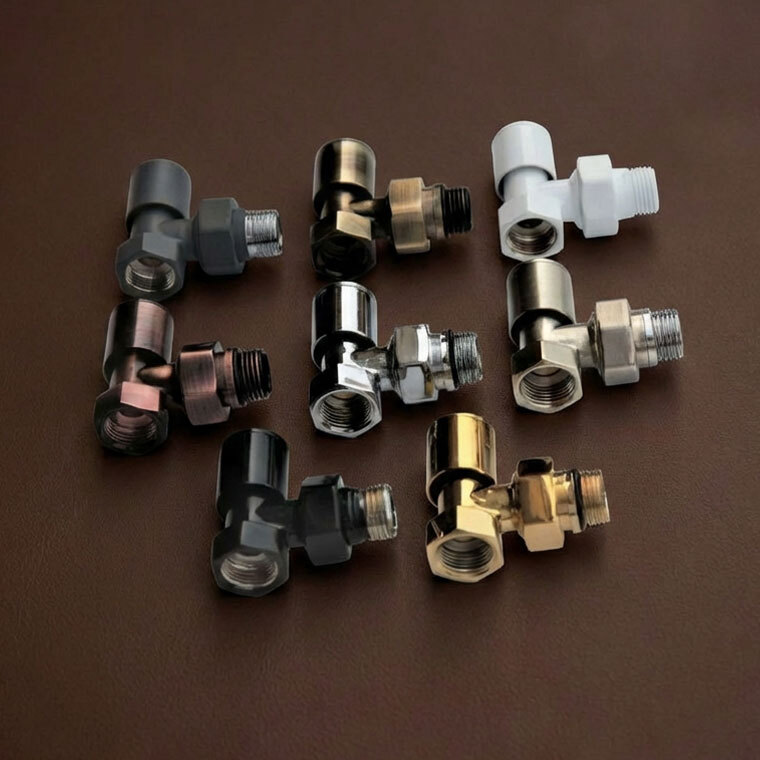
When choosing a finish, you can coordinate the radiator or towel rail with taps, shower systems, cabinet handles and other metal details in the room. At the same time, leave sufficient space around the product for heat to circulate effectively. Always follow the model's technical drawing for installation clearances and connection details.
Pay Attention to Controls and Safe Use
Heating comfort improves when temperature can be managed according to actual needs. In suitable systems, thermostatic radiator valves help limit unnecessary heating by regulating water flow according to room temperature. Room thermostats and time programmes can also help heating fit more naturally into daily routines.
For electric towel rails, suitability for bathroom use, the product's IP protection rating, installation position and electrical system should all be evaluated together. Installation must follow the manufacturer's instructions, and electrical connections should be completed by a qualified professional.
When evaluating energy consumption, do not look only at the product's rated power. Operating time, temperature settings, control features and the room's heat loss all influence actual consumption.
Compare Warranty and After-Sales Support
Alongside the initial purchase price, consider warranty coverage, installation conditions and after-sales support. Warranty periods may differ for the body, surface finish and electrical components. Instead of looking only at the total warranty duration, check which parts are covered and under what conditions.
It is also useful to confirm whether valves, mounting accessories or electric heating kits are included in the price. Access to technical information and replacement parts when needed can support reliable long-term use.
Choose the Right Solution for Your Living Space
The right towel rail or radiator is one that meets the room's heat requirement, works with the existing heating system and makes everyday use more comfortable. Once this technical foundation is correct, colour and design choices can bring heating performance and interior aesthetics together.
To explore towel rails and decorative radiators for your living space, or to get support with sizing and model selection, contact Radiva.



