


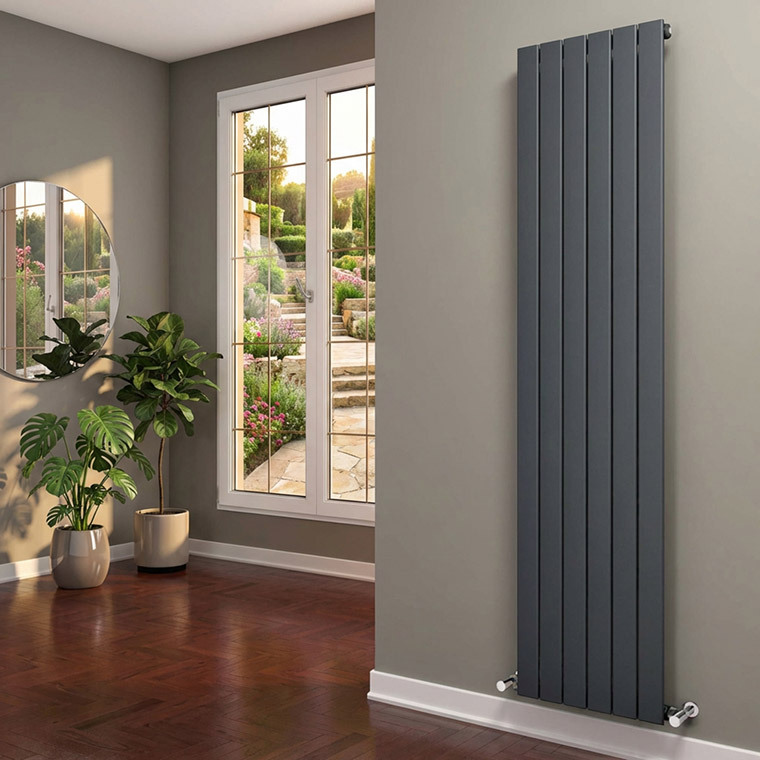

Hydronic radiators transfer heat from hot water circulating through heating pipework into your room. If your home uses a boiler, communal heating or a heat pump that supplies a water-based heating circuit, you can choose a Radiva radiator suited to that system. The right choice brings together the room’s heating needs, the system’s operating conditions and the connection dimensions.
This guide helps you identify your heating system, use the heat output and floor area information in Radiva product details, and check the connection centre spacing before buying.
How Hot Water Heats Your Room
Water from the heat source warms the radiator as it flows through it. The radiator releases heat into the room and the water returns to the heat source. It connects to heating pipework, not the hot water supply to taps or showers. A standard hydronic radiator itself needs no socket, although the boiler, pump and controls may use electricity.

Identify Your Home’s Heating System
| System | What it means for you |
|---|---|
| Individual boiler | Heats when hot water reaches the heating circuit. |
| Communal heating | Heating depends on the building’s schedule and circuit conditions. |
| Heat pump supplying hot water | Size the radiator for the planned water temperatures. |
Match the Heat Output to Your System and Room
Why Water Temperature Matters with a Heat Pump
An air-to-water or ground-to-water heat pump can supply a suitably designed radiator circuit. An air-conditioning system that only delivers warm air cannot power a hydronic radiator on its own: a hot water heating circuit is required.
Heat pumps often operate with lower heating water temperatures. At the same room temperature, a radiator releases less heat when the water is cooler. Check its output at your planned flow and return temperatures rather than relying on a rating for hotter water. A larger radiator or a model with greater capacity may be needed.
How to Read Radiva Product Information
Radiva lists hydronic model heat outputs in kcal/h, watts and BTU, together with the average floor area each product can heat. Kcal/h and watts are units of heat output; BTU in this context refers to output per hour, or BTU/h. These express the same capacity in different units. The watt figure for a hydronic radiator is not its electricity consumption.
Compare the exact model and size using the same unit and temperature conditions. For example, 75/65/20 °C means 75 °C flow water, 65 °C return water and a room temperature of 20 °C. Where ΔT is shown, it is the difference between average water temperature and room temperature: 50 °C in this example.
Use Floor Area Information for an Initial Choice
Multiply the room’s width by its length. A room measuring 4 × 5 metres is 20 m². Compare this with Radiva’s average heating area for the selected product and size. Different sizes of the same design can have different heat outputs.
The floor area figure is a guide. Insulation, ceiling height, glazing, external walls, climate and the desired room temperature affect the actual requirement. Particularly in low-temperature systems, the radiator’s output at the intended water temperatures must meet the room’s heat loss. Share these conditions with Radiva.
A radiator can also be added to a home with underfloor heating, provided an installer checks the circuit, water temperatures and circulation. Connecting it directly to any available underfloor heating loop is not suitable for every installation.
Check Connection Centres Before Buying
When replacing an existing radiator, checking the connection centres and connection layout is one of the most important steps before purchase. A radiator with enough heat output may still fail to fit your existing pipes. First identify compatible models, then choose the size, appearance and colour.
What Connection Centre Spacing Means
Connection centre spacing, labelled AKS in Turkish product details, is the distance between the centres of the two heating connections being used. It is not necessarily the radiator’s overall width or height. It is often horizontal for bottom connections and may be vertical for side connections, depending on the inlet and outlet arrangement. Follow the selected model’s technical drawing.

How to Measure the Connection Centres
- Identify the exact centres of the intended flow and return connections. Do not measure between the outer edges of the pipes.
- Measure from centre to centre with a tape measure and note the distance in millimetres. For example, 45 cm is 450 mm. This is only a measurement example; radiator connection centres vary.
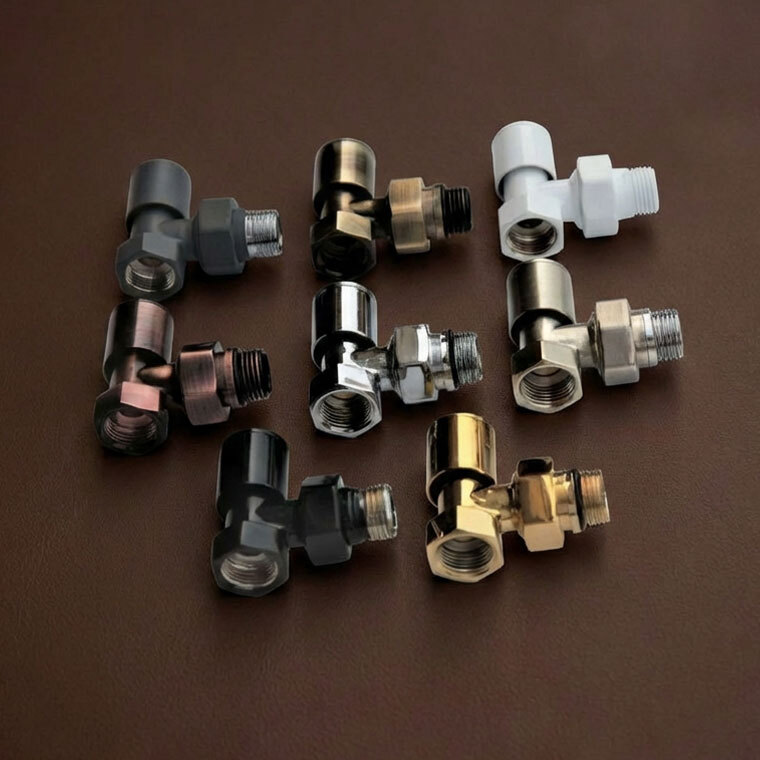
- Compare your measurement with the drawing for the exact Radiva size and connection option. If valves are fitted, include their type, orientation and dimensions. The distance between pipes emerging from the wall may differ from the radiator’s connection spacing because of the intervening valves.
If you are unsure, share a photo of the pipework and your measurements with Radiva live chat. Confirming compatibility before ordering is essential to avoid unexpected pipework or wall alterations.
Plan Installation and Everyday Use
More Freedom When Installing New Pipework
When the pipework will be installed to suit your chosen radiator, you have much more freedom over the model and size. Radiva’s wide range of designs, dimensions and colours helps you find a radiator that meets the room’s heating needs and complements its décor. Confirm the model, size and connection option first, then have the pipe outlets positioned to its technical drawing.
Wall Space and System Conditions
Check the width, height, projection from the wall and space needed for valves. Allow for opening doors and furniture, and keep the radiator unobstructed. Select horizontal or vertical versions according to the product drawing; do not assume a radiator can simply be rotated.
Especially with communal heating, operating pressure and temperature must stay within the chosen model’s limits. A professional should check the wall’s load-bearing capacity, fixings, heating water and installation conditions. Commissioning includes leak checks, venting and circulation adjustments. Materials, pressure limits and warranty periods can vary by model, so use the product’s own information.
Frequently Asked Questions
Can It Work with a Heat Pump?
Yes, with a suitable hot water circuit and sufficient capacity. Check the model’s output at your system’s flow and return temperatures.
Will It Heat in Summer?
A standard hydronic radiator does not heat without hot water in its circuit. A combi boiler in summer mode normally heats domestic hot water only. For independent use, consider Radiva electric radiators.
Will a New Radiator with the Same Overall Dimensions Fit the Old Pipes?
Overall dimensions alone are not enough. Connection centres, layout and valve dimensions must also match.
Choose the Right Radiva Radiator with Us
Share your room dimensions, heating system, connection centres if available, a photo of the pipework and your preferred model. We can help you assess heat output, average heating area, connections and colours. Radiva live chat at radiva.com offers immediate replies at many times throughout the day. You can also call +90 216 469 8406 during office hours.



